
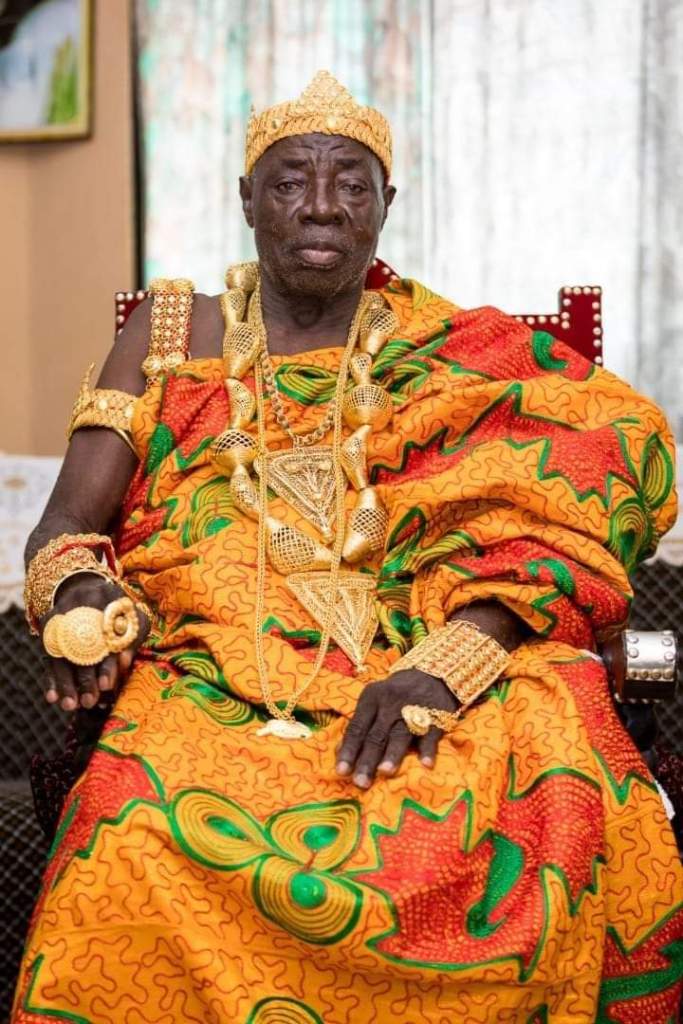
Ahanta people are part of the larger Akan family situated in the Western region of Ghana. They are peaceful and loving. The etymology of Ahanta is arguable because of it dichotomic explications. The more convincing account stipulates the word ‘Ahanta’ believed to have coined from the Fante word “hata” which corresponds with “ɣɩnda” in the Ahanta language, meaning to dry or warm oneself when wet or cold. It is believed the forefathers used to warm themselves or/and dry their clothes in the sun, as a result, they were referred as Ahatafoɔ, which has been corrupted into Ahanta, the ethnic name. Another account says, Ahanta has its meaning derived from ‘land of twins’.
Historically, it is believed the Ahantas migrated along with the Fantes from the medieval Bonomanso (later referred as Techiman) in 1200s after they separated from Bono. They headed to the coast with the Fantes, and moved further southward to establish a kingdom between the Pra and Ankobra rivers. They encountered the Guans who were indigenes and brought them under a single authority.
The Ahanta have rich experience in military expeditions and strategies, this was deployed to avoid being subjugated by the neighbouring states bounding the Pra, Ankobra and Bonsa and the Atlantic ocean. In 1471, before the arrival of the Portuguese, the Ahanta kingdom has been well established along the Atlantic Coast under the leadership of Kojo Nda at Busua. It was easy for them to establish a kingdom and organize it well because of the experience of living at Bonomanso.
The Portuguese built a trading post at Elmina, Fort St. Anthony at Axim and Fort Sebastian at Shama in 1482, 1515 and 1626 respectively. The Dutch arrived in 1590s and started posing threat to the Portuguese, constant battle ensued between the two, consequently the Dutch drove the Portuguese out of Gold Coast and captured the aforementioned trading post established by the Portuguese. The Dutch built Fort Orange in Sekondi in 1642 and Fort Batenstein in Butre in 1656. The Dutch took full control of Ahanta, on 27 August 1656, the Butre treaty was sign between the Ahanta chiefs and the Dutch which made Ahanta a protectorate of the Dutch from the attacks of other European nations who had interest in the ongoing slave trade. The pact lasted until 1871 when the Dutch left the Gold Coast and the British took over.
In the early 1800s, they revived their kingdom under a powerful king and with the rhythmic name Badu Bonso. History has it that Badu Bonso possessed whimsical powers and conquered his foes with ease. His prowess and persistence wars gave way to his settlement and expansion at Busua which was abode of whales. Hence ‘beduru bonso’ to wit, ‘to have reached the whales’ corrupted into Badu Bonso. This earned him the title Otumfour literally the powerful one.
The successor Otumfour Badu Bonso ll, was belligerent against the Dutch in 1837 and ended up killing the Dutch officials whose governance were against his likeness. The Dutch government used the treaty as the basis for military action and an expeditionary force was sent to Ahanta in 1838. At the apex of the war, the Ahanta king otumfour Badu Bonso ll was decapitated and the head was sent to the Netherlands for experiments at Leiden University Medical Center. In 2009, the head was returned to Ghana. The fall of the Ahanta kingdom can significantly be attributed to the arrival of the Europeans in Gold Coast.
Ahantas are predominantly located in Sekondi -Takoradi, Dixcove, Shama, Busua, Butre, Agona Nkwanta, Essikado etc.


 ENDTIME PRAYER RADIO AND TRIPLE K. MEDIA, BELONGS TO BISHOP DR. PETER ABABIO AND REV. SABINA NSIAH ABABIO..
Leave a comment