
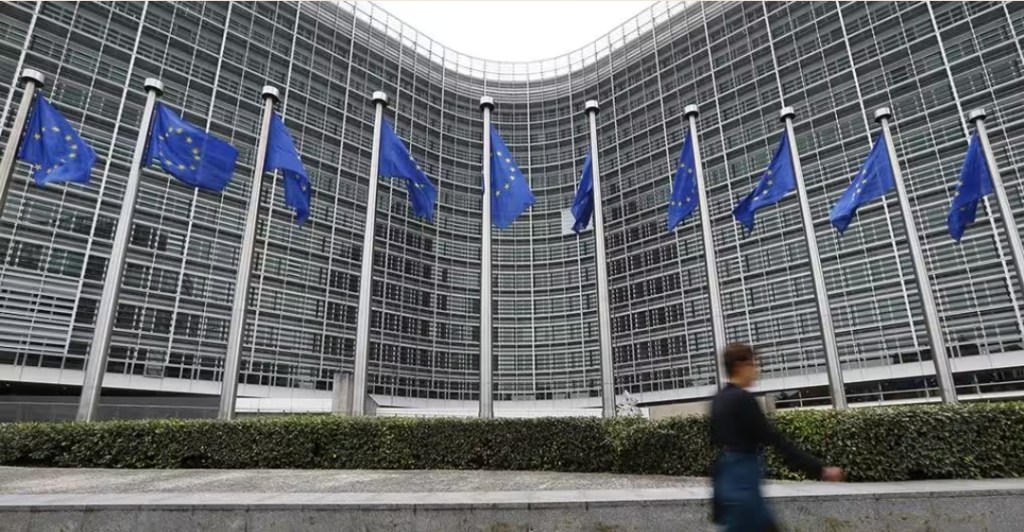
Ahead of the elections to the European Parliament next June, a group of past and well-known European policy makers, eminent personalities and leading academics present their position on the challenges the European Union is facing, and indicate the lines for ambitious solutions. The authors, writing in a personal capacity, identify seven key factors that could provide the basis for a new political contract capable of restoring trust and strengthening solidarity, reviving the European Union’s capacity to protect the interests of its citizens and articulating the international role of the Union itself. Although they fully agree with the general lines of this manifesto, the authors may not agree with some of the specific aspects.
The persistent war in Ukraine and the deepening of the conflict between the United States and China are the factors that characterize our time. A new world order is being defined, and if it remains a half-finished construction, the European Union (EU) will have no role in shaping this new order. While the United States and China are economic and political areas, the EU cannot be called such. Yet, if there were a third global actor, the international system would have a more stable shape. The EU must make an effort to create the conditions for a return to multilateralism and to prevent international relations from being dominated by pure logics of power that would worsen the conditions of each of us
The geopolitical tone and role of the EU will depend, decisively, on the European ability to reconcile its internal agenda with its international agenda. To this end, the protagonists of the European scene must acquire the awareness that the current socio-economic, institutional and – ultimately – also political model is not sustainable in a post-pandemic world torn by ‘hot’ and ‘cold’ wars .
From a socio-economic point of view, the dependence on external demand, the gradual retreat from the technological frontier, the risk of losing the leadership position in the fight against climate change, stagnant demography and the progressive crumbling of social cohesion are putting the cornerstones of the European economic and social model are under discussion.
From an institutional point of view, a decision-making process that is able to make significant progress only in the face of major crises and which is – moreover – vulnerable to decisions of the opposite sign when the emergency disappears, does not is compatible with the need to design a project that is consistent with internal and international needs.
The persistence of two conflicts is forcing the political framework of the EU to the extreme limit: the traditional “North-South” conflict of interests, which is expressed along the solidarity-responsibility polarity, and – as a complement to this tension – the conflict of “east-west” values that unfolds along the integration-national sovereignty polarity. Recent political changes in various EU member states increase the geographical complexity of these conflicts.
The economic and social weaknesses, institutional inconsistencies and political tensions are destined to increase and lead to the paralysis of the EU, when its enlargement to 35 members or more is looming.
A new synthesis is needed that leads to a renewed political contract.
A useful starting point is to specify the roads that should not be taken. Denialism regarding climate change, the short-term perspective typical of mercantilism with an eye towards the past, the temptations to pursue technolSeeking new paths is crucial not so much to confirm the superior interest of “Europe”, but to allow its members to effectively pursue their long-term internal and external objectives. The time has come to recognize that nationalism is contrary to the national interest, that the national sovereignty of individual EU member states is unworkable unless it is redefined in terms of European sovereignty and that the provision of European Public Goods it is essential to respond positively to national demands for economic, social and political security.
To address today’s crucial challenges, it is inevitable to adopt an approach based on the European dimension. Reaching technological frontiers will require public and private resources that member states cannot mobilize alone. The effective implementation of the ‘green’ and digital and artificial intelligence transitions requires the completion of the Banking Union and an operational translation of the Capital Markets Union in order to allocate public and private resources to support projects which have “wide breadth” in conception but “short breadth” in the collateral available. The pooling of forces and resources at the European level will be necessary to fulfill the enormous task of rebuilding Ukraine. Just as it will be necessary to bring together, at a European level, sovereignty in defense and security to ensure protection of the area in a world characterized by growing threats and isolationist temptations.
To effectively manage the immigration challenge, a new relationship between the EU and Africa needs to be established. This relationship must be based on cooperation agreements that cannot be reduced to limiting the departures of migrants; instead, it is about building a new model of inclusion in EU member states that focuses on education, training and the creation of employment opportunities.
In all these matters, member states will have to choose by mutual agreement whether they want to be co-protagonists together, or marginal extras alone. If they intend to act as protagonists, they must be ready to provide the EU with the necessary powers. This does not mean immediately pursuing an unrealistic European federation. Instead, it is a question of pursuing a new articulation between national policies (horizontal coordination) and between national levels and the centralized level (vertical coordination). Such an evolution can be called “gradual and pragmatic federalism”.
During the last fifteen years the EU has been hit by a series of exogenous shocks, partly common to other areas and partly idiosyncratic. The EU has learned the hard way how significant the costs can be for incorrect or late responses to such shocks. In this regard, it would have been a very serious mistake to react to the pandemic and the consequences of the war and the related energy crisis by reproducing the choices of the 2011-’19 period, characterized by pro-cyclical budget policies and an overload of monetary policies. Conversely, the EU has adopted both a radically new economic policy mix and a set of institutional innovations. It has brought about the emergence of a new multilevel governance system through the centralization of the supply of vaccines, the launch of the recovery plan known as Next Generation – EU, the coordination of national energy policies, the measures against climate change called Fit-for- 55 and joint programs for the support of Ukraine.ogical protectionism and to withdraw from international value chains, listening to the sirens in favor of autarky demographic and the outsourcing of defense and security functions would be equivalent to condemning the EU to irrelevance in international governance. False solutions of this kind would not only hinder positive evolution, but would also undermine existing European strengths such as the functioning of the single market and comparative advantages in terms of environmental standards, welfare and regulation.


 ENDTIME PRAYER RADIO AND TRIPLE K. MEDIA, BELONGS TO BISHOP DR. PETER ABABIO AND REV. SABINA NSIAH ABABIO..
Leave a comment