
Kings of the medieval Bono kingdom
Bonohene Nana Yeboa Ananta (1595–1609)
The new King, Nana Yeboa contrived to re-establish order within a couple of years. He bought guns from Danish merchants on the coast and with these defeated the Mande. He received the posthumous praise-name of ‘Ananta’, ‘Danish gun.’
A minstrel song eulogizes him thus: Nkron ne nkron nua wosɛ din na wonsɛ nko mmrane. Onipa a ɔwɔ din, na wɔbɔ ne din sa no nko mmrane. (‘Take nine, take nine bothers. Their names are the same but not their deeds. He who is famous for his deeds alone deserves new titles of praise.’)
Nana Yeboa Ananta re-established the divine kingship; and though said to have often insisted that gold symbolizes the King, and silver the Queen, nevertheless had a spinning basket made for the Queen in gold rather than silver.
During this time, sections of Fante mostly women living at Bonomanso decided to establish a new town. Takyi Firi, a grandson of Nana Yaa Nyamaa, a niece of Amoasanka, therefore left Bono-Manso for a village some ten miles away, then inhabited by Dwomo/Dwomo. He enlarged it into Takyiman, which soon became one of the largest town.
His mother Yaa Takyiwaa gave ‘life’ to Tano in a cave near the river Agyentoa. The Bonohemaa Kuruwa I, the daughter of a Fante priest, accepted the god by presenting Takyiwaa with a golden key, as symbol of her office as high-priestess to Tano. The king Yeboa Ananta gave gold dust to be poured into the source of river Tano when rites were performed.
Nana Yeboa Ananta specialized in cotton-growing, spinning and weaving, and imported weavers from the Wangara/Mande neighbours. Bonohemaa Kuruwa I decreed that spinning was an exclusively female pursuit, and introduced the art into her palace, which kept numerous girls busy. It was on this account that Yeboa Ananta gave her the golden spinning basket. He is remembered as a very spiritual man, who did nothing without consulting the divine oracles.
With equal punctilio he also consulted the various Queens who shared his reign, thus Bonohemaa Kuruwaa, Bonohemaa Afranewaa and Bonohemaa Afrakomaa respectively.
Reference: Meyerowitz, E. L. R.(1958) The Akan of Ghana and their ancient beliefs (pp. 115–117). Faber & Faber Limited. 24 Russell Square, London.
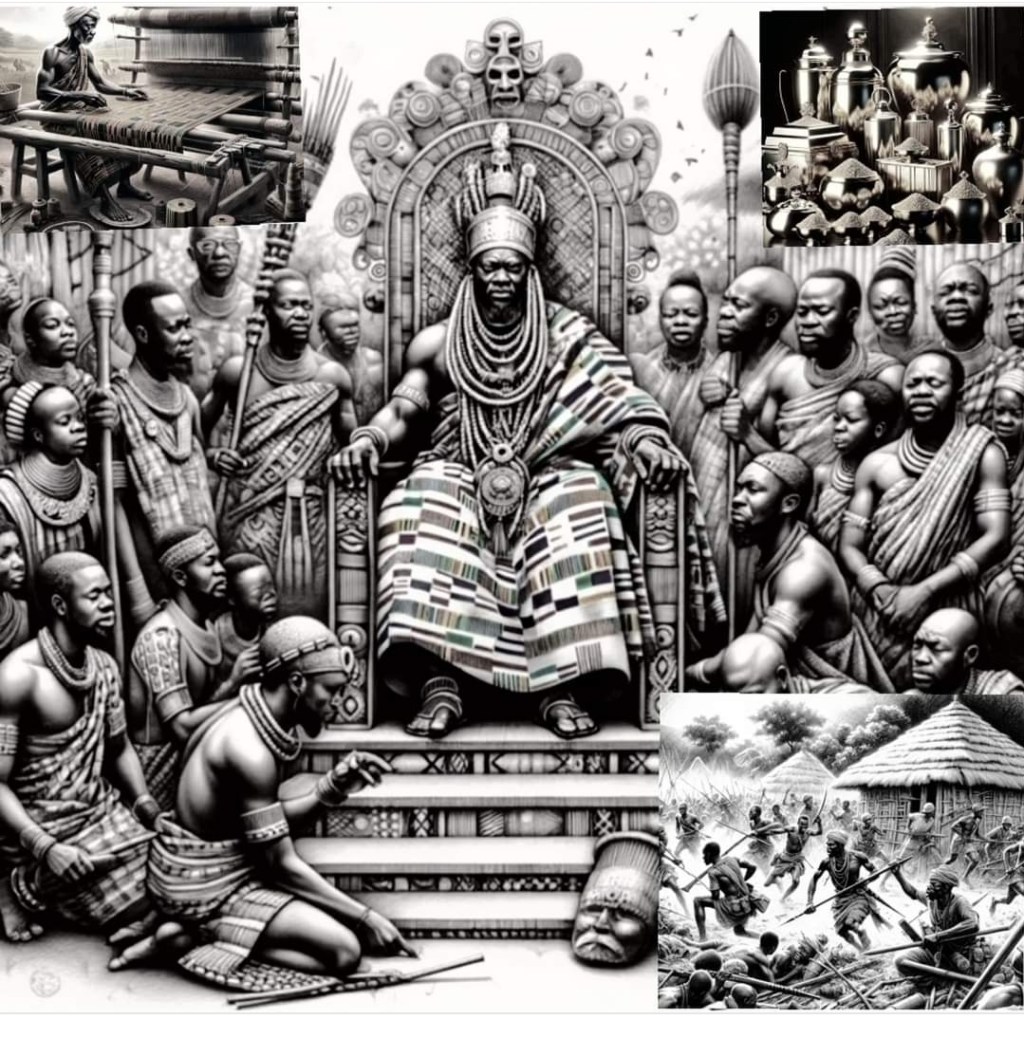
BONO KINGDOM 1595-1609
Kings of the medieval Bono kingdomBonohene Nana Yeboa Ananta (1595–1609) The new King, Nana Yeboa contrived to re-establish order within a couple of years. He bought guns from Danish merchants on the coast and with these defeated the Mande. He received the posthumous praise-name of ‘Ananta’, ‘Danish gun.’ A minstrel song eulogizes him thus: Nkron…
2–3 minutes
Discover more from ENDTIME PRAYER RADIO AND TRIPLE K. MEDIA, BELONGS TO BISHOP DR. PETER ABABIO AND REV. SABINA NSIAH ABABIO..
Subscribe to get the latest posts sent to your email.


 ENDTIME PRAYER RADIO AND TRIPLE K. MEDIA, BELONGS TO BISHOP DR. PETER ABABIO AND REV. SABINA NSIAH ABABIO..
Leave a comment