
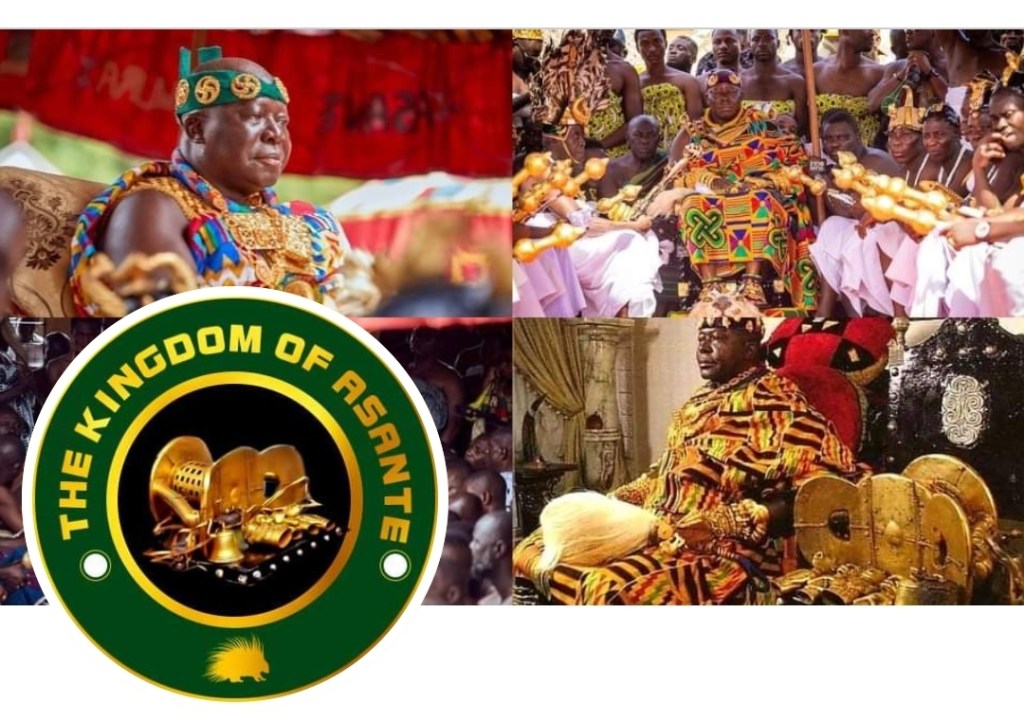
The word sanaa is comparable to our modern day vault in a bank. Sanaa is the vault for keeping state funds that is essentially gold dust and the gadgets for weighing.
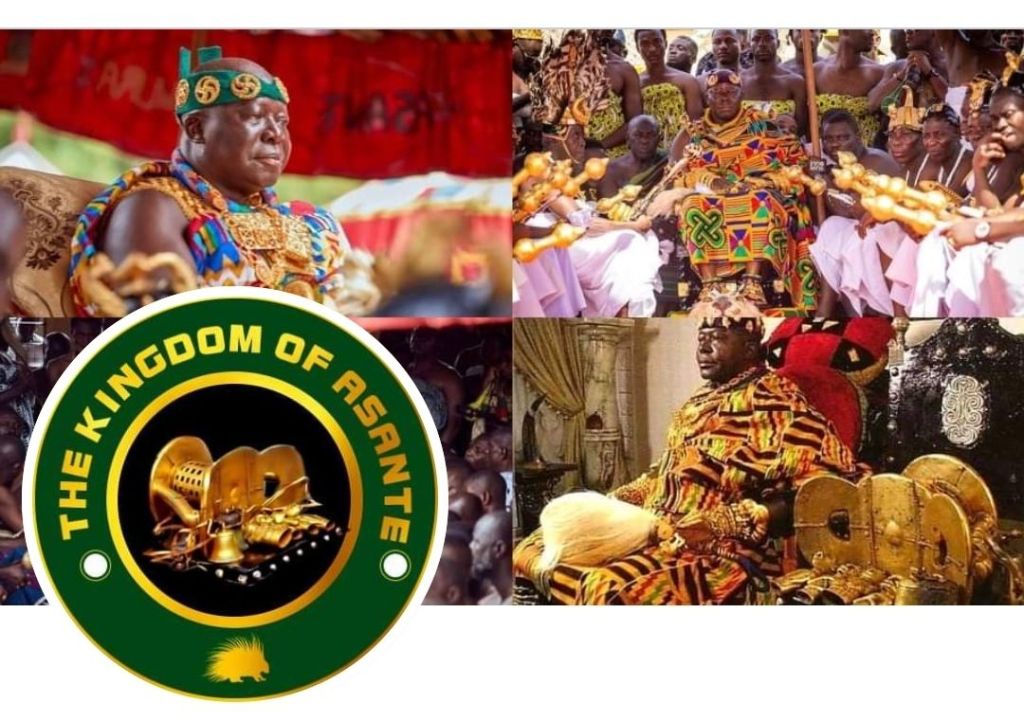
Until Opoku Ware brought sanaa from Techiman to Kumase and created a stool for it, the Afotosanfoɔ were responsible for the treasury. It is said that when the chiefs and people of Techiman realized the sanaa had been taken away and it was on its way to Kumase, they sent a rescue team to retrieve it. When the Asante group/party realized the rescue team from Techiman were getting close, they took refuge in aprabɔn (a cave) and covered the entrance with a huge boulder. They waited for the all-clear sign before proceeding to Kumase with the sanaa.

The repertoire of Asantehene’s kete chorus has a narrative about this historical incident. As the chief responsible for the treasury and accounting, the Sanaahene is practically responsible for the day to day running of Manhyia Palace making his responsibility all encompassing. He provides funds for the royal household including the queen mother’s court, for the making of new regalia and for the repair of existing ones including sound producing and musical instruments. Additionally, he provides funds for royal funerary rites, funerary rites for ahenkwaa (courtiers), palace chiefs and officials, and for those in and outside the kingdom. Similary, he provides items for rituals at various locations within the kingdom.
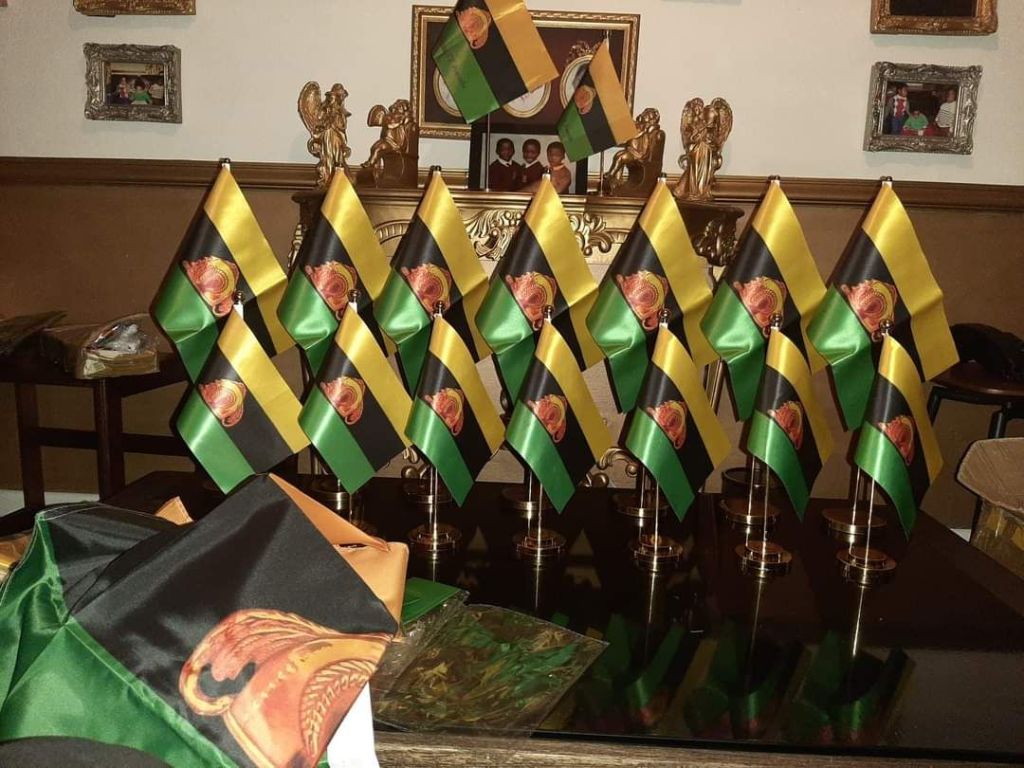
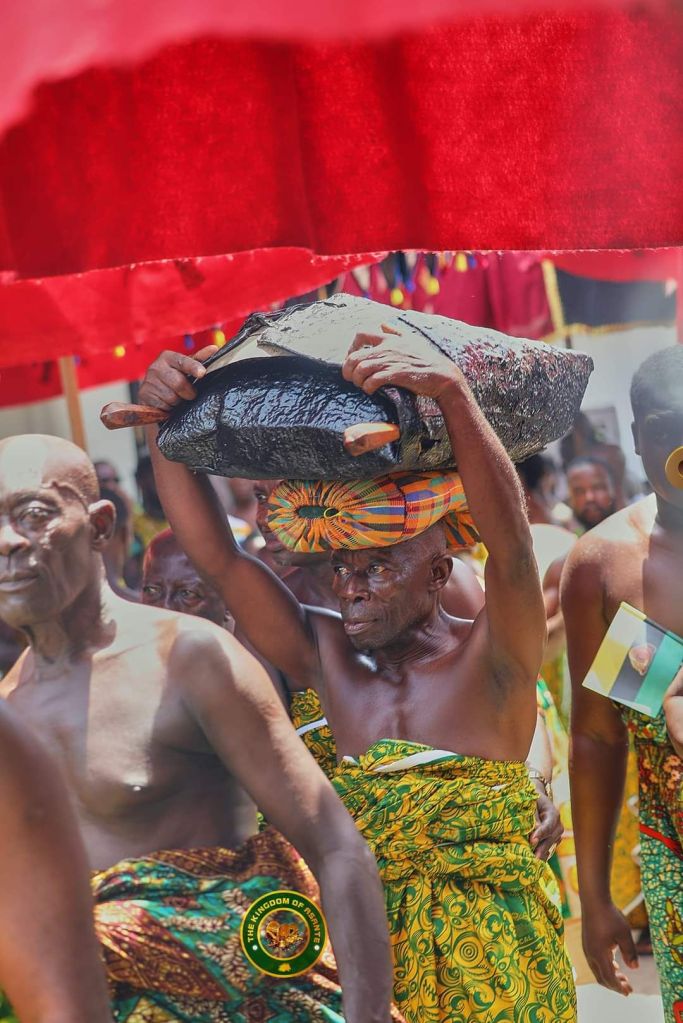
Kyerematen (1969:3) lists the following functions of the Sanaahene: he collects the king’s share of any payments made in the court such as aseda or thanks-offering; he is responsible for accounts in connection with the Sunday and Wednesday Adae Festivals; and deputizes for the king when he is unable to go himself to the three royal mausoleums at Bampenase, Bantama, and Akyerɛmade. It is worth noting that the above list is by no means exhaustive since the position and duties of Sanaahene is fairly substantial. Sanaa (the vault) is brought out whenever the Gold Stool is part of a procession or a ceremony. It usually follows the Gold Stool in a procession
Description:
The black cover is made of elephant ear tied over famfa (copper basin but looks goldish) with ɔtwe nwoma. Deep black color of the elephant ear is due to instances when they perform purification rituals with a sheep’s blood known in Twi as yɛ due. Brownish board is famfa. In the past, famfa was used as a container for gold dust. There are two sekantwaa (knives) on both sides and kente kakyire (as a cushion for the carrier). Sanaa Dikro’s household is respsonsible for carrying the Sanaa during processions and festivals. The contents and the samsa is known only to the Asantehene and the Sanaa Fekuw and in rare cases when they cannot find a regalia or an item at Manhyia Palace for a ritual, they will open the sanaa for Asantehene and will tie it back once they find the item.


 ENDTIME PRAYER RADIO AND TRIPLE K. MEDIA, BELONGS TO BISHOP DR. PETER ABABIO AND REV. SABINA NSIAH ABABIO..
Leave a comment