
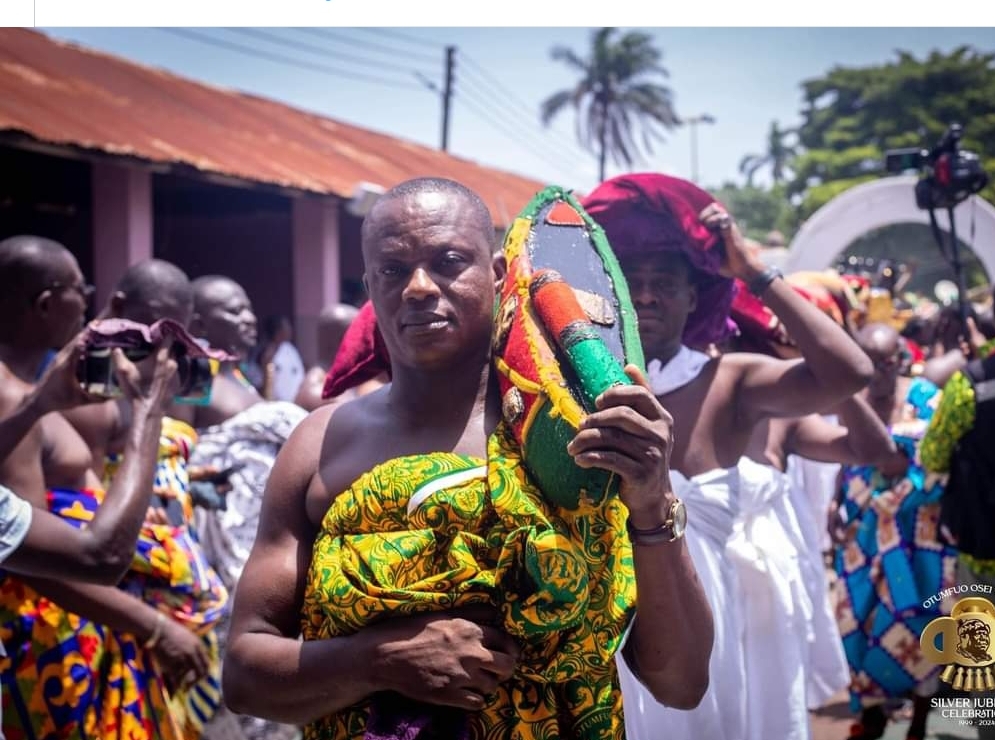

Tradition demands that Asantehene and Amanhene (Paramount chiefs) feet should not touch the ground when they are seated but rather rest on a Footstool. In Asante and other Akan states, the footstool is known as Akorowa.
Akorowa can only be use by the Asantehene and Paramount chiefs within Asante when they sit in state on the Hwedɔm, Asipim and Akronkromfi chairs. In the case of Asantehene, the Akorowa is mostly placed on banwoma (refers to all types of animal skin made of the lion and elephant) which is used to serve as a carpet for the Kings chair.
The Akorowa can also be placed on a black and white blanket(nsaa) and the two (2) sides supported with a wood or stones.
The Akorowa is placed in front of the hwedɔm and Akronkromfi chairs to enable Asantehene and Paramount chiefs within other Akan states comfortably rest their foot on it.
It has an oval shape or better still its shape can be likened to a canoe. It is made of apuro (a solid white wood) and nsɛbɛ (amulets) attached to its top, sides and base. It is usually painted black leaving some of the wood colours visible.
The base of the Akorowa could be flattened and broaden to avoid the use of stones or wood which has no cultural significance in supporting it. This could enhance its presentation when displayed publicly and make the Asantehene and the Paramount chiefs more comfortable when seated.
The Akorowa symbolizes state. The fact that Asantehene’s feet rest on the Akorowa signifies that the whole Asante Kingdom is under his jurisdiction, thus he is the controller of the affairs of the state and only his decision reigns supreme.
The nsɛbɛ(amulets) wards off evil powers by preventing evil spirits entering his body from the ground, thus signifying the spiritual essence of the royal object.
The Nsaa is a symbol of quality and durability. Its combined use of black and white colours signifies hope, abundance and bumper harvest


 ENDTIME PRAYER RADIO AND TRIPLE K. MEDIA, BELONGS TO BISHOP DR. PETER ABABIO AND REV. SABINA NSIAH ABABIO..
Leave a comment