
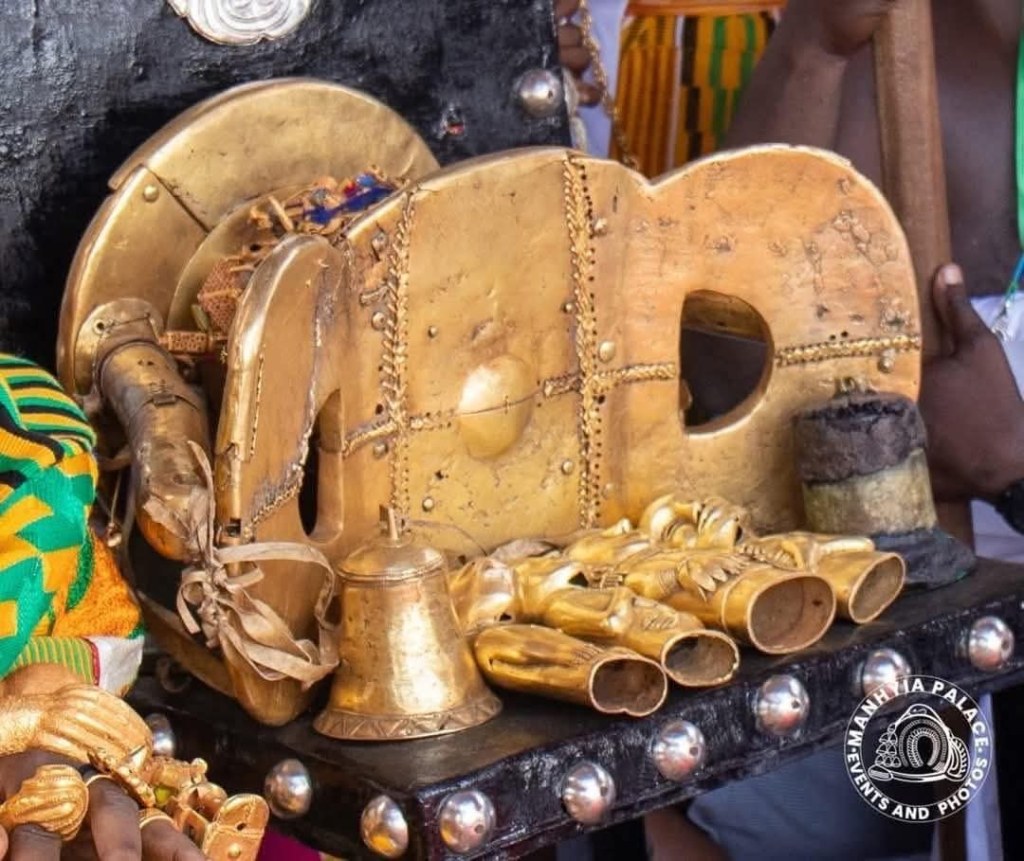
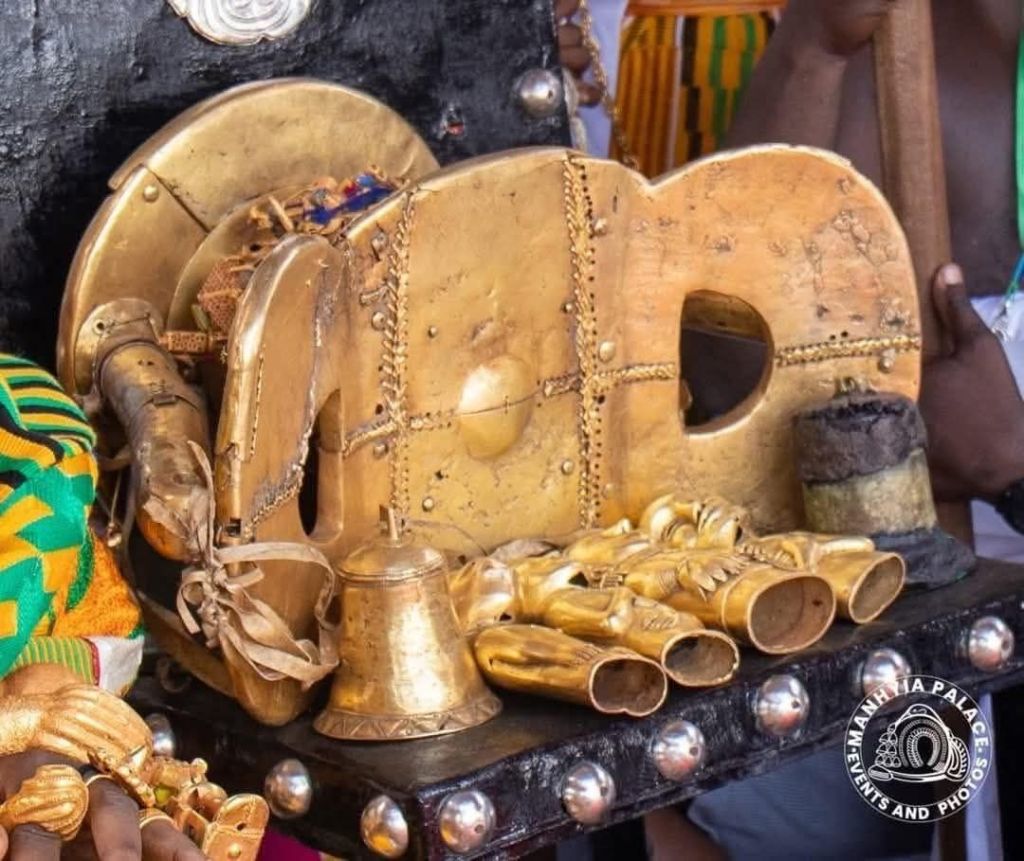
The Golden Stool, known in the Ashanti language as Sika Dwa Kofi (“the Golden Stool born on a Friday”), is the most sacred object of the Ashanti people of Ghana. It is not merely a throne or a symbol of power; it is believed to house the sunsum, or the soul, of the entire Asante nation—including the living, the dead, and those yet to be born.
Origin and Legend.
According to oral tradition, the stool was conjured from the sky and made to descend into the lap of Osei Tutu I, the first Asantehene (King) of the Ashanti, by his high priest, Okomfo Anokye, in the late 17th century. This event solidified the union of the various Akan states into the powerful Ashanti Confederacy. The Golden Stool thus became the ultimate symbol of their collective strength, unity, and sovereignty.
Significance and Beliefs
The reverence for the Golden Stool is profound and deeply embedded in Ashanti culture and history:
* Repository of the Nation’s Soul: The central belief is that the stool contains the very spirit and essence of the Ashanti people. Its safety and preservation are directly linked to the survival and prosperity of the nation.
* Symbol of Authority: The stool legitimises the rule of the Asantehene. No one can be considered a legitimate ruler without the Golden Stool, and a new king is raised and lowered over it during his enstoolment ceremony without ever touching it.
* A Living Object: The stool is treated as a living entity. It is never allowed to touch the ground and is always placed on its own throne or a special blanket. It is carried on a pillow and has its own attendants.
* The Cause of War: The extreme importance of the stool was demonstrated in the “War of the Golden Stool” in 1900. When the British colonial governor, Sir Frederick Hodgson, demanded to sit on it, the Ashanti people, led by the Queen Mother Yaa Asantewaa, rose in revolt. They would rather fight a war and risk their lives than allow the sacred stool to be desecrated. Although the Ashanti were ultimately defeated and their territory was annexed, the British never captured the Golden Stool.
Present-day Status
The Golden Stool remains a cherished symbol of the Ashanti people. It is kept in a secret location, and only the Asantehene and his most trusted advisors know its whereabouts. It is brought out for special ceremonial occasions and continues to play a central role in the rituals and identity of the Asante, who, while no longer an independent empire, remain a powerful and culturally significant force within modern Ghana.




 ENDTIME PRAYER RADIO AND TRIPLE K. MEDIA, BELONGS TO BISHOP DR. PETER ABABIO AND REV. SABINA NSIAH ABABIO..
Leave a comment