

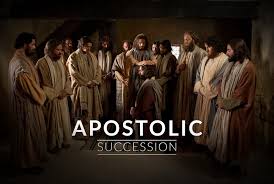
Apostolic succession refers to the uninterrupted transmission of spiritual authority from the Apostles of Jesus Christ to the present day through the consecration of bishops.
Key Components
- Unbroken Lineage: Apostolic succession emphasizes the importance of an unbroken lineage of bishops, tracing their ordination back to the Apostles.
- Spiritual Authority: This concept is rooted in the idea that bishops inherit the spiritual authority of the Apostles, ensuring continuity and authenticity in the transmission of Christian doctrine and practice.
- Consecration of Bishops: The consecration of bishops is a crucial aspect of apostolic succession, as it ensures the continuation of the apostolic line.
Historical Significance
Apostolic succession has played a significant role in the development of Christian traditions, particularly in the Eastern Orthodox, Roman Catholic, and some Anglican churches.
Theological Implications
- Authority and Legitimacy: Apostolic succession is often seen as a means of establishing the authority and legitimacy of church leaders.
- Continuity with the Apostles: This concept emphasizes the continuity between the early Christian community and the present-day church.
- Guarding Doctrine: Apostolic succession is also seen as a way to ensure the preservation of Christian doctrine and practice.
Reflection Questions
- What does apostolic succession mean to you, and how does it relate to your understanding of church authority and tradition?
- How do you think the concept of apostolic succession has shaped the development of Christian traditions?
- What are some potential implications of apostolic succession for the unity and diversity of Christian denominations?




 ENDTIME PRAYER RADIO AND TRIPLE K. MEDIA, BELONGS TO BISHOP DR. PETER ABABIO AND REV. SABINA NSIAH ABABIO..
Leave a comment